


DESIGN THINKING TRAINING & CONSULTANCY
Better workshops.
Better decisions.
Better remembered.


We teach design, talent and leadership teams the tools of visual facilitation, innovation and storytelling. So your best thinking travels across meetings, teams and languages, long after we've left the room.

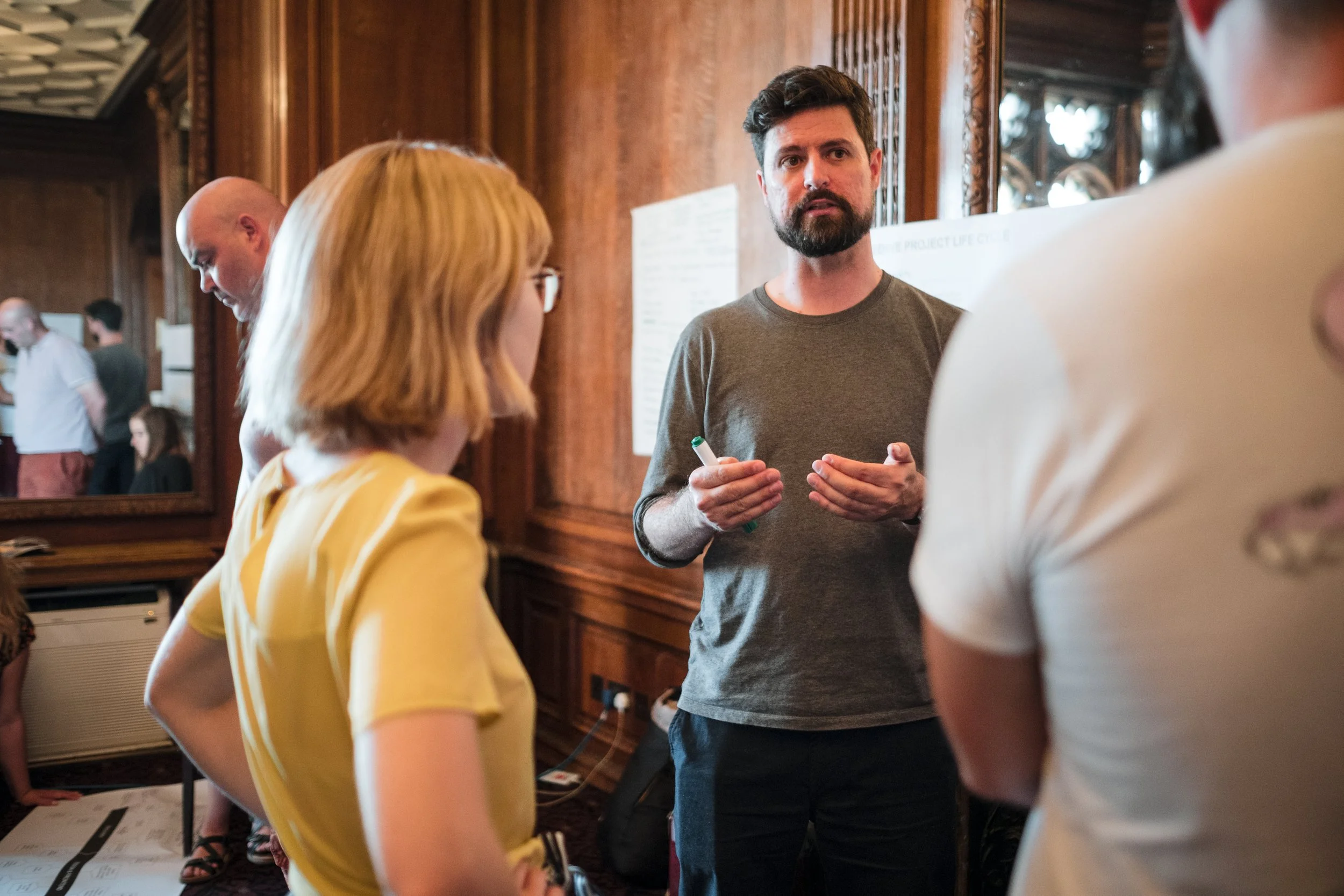
For teams at organisations who've outgrown their old ways of working.
Charity innovation leads trying to bring fragmented teams onto the same page. Corporate L&D leaders under pressure to make transformation stick, not just launch. Anyone who's sat through a meeting that ran long, ended without a decision, and left everyone slightly more confused than when it started.
If that sounds familiar, this is for you.

"Working with Ben transformed how our team approached our needs analysis and design processes…
He facilitated empathy mapping sessions and user research activities that shifted our entire perspective on what our employees actually needed."
— Rachel Finch, Global Experience Lead, People Manager Development, HP
Why workshops fail
Most bad workshops fail for the same handful of reasons, and none of them are personality problems.
Slides that replace facilitation instead of supporting it. Introductions that go on too long. Rooms that stay flat because energy was never built in — it doesn't just happen. Instructions nobody wrote down. Sessions that end with good intentions but no agreed actions.
These are design failures, not people failures. Fix the structure, and the rest follows.

What we teach
Practical, hands-on training in how to design and run sessions that actually change what happens next — grounded in twenty-plus years of coaching and managing creative teams, not just facilitating them for an hour and moving on.

The Back-to-Front Framework — designing a session from the outcome backwards (what does the room need to have decided by the end?), rather than starting with a list of activities and hoping they add up to something.

The open, the flow, the close — energy resets, timeboxing, parking lots for tangents, and closing with clarity so nothing important is left unresolved in the room.

Reading the room — who needs processing time, who dominates, who's three levels junior to everyone else. Designing for the edges of the room, not the average participant.

A working toolkit of exercises — from Crazy 8s and silent ideation for generating options, to dot voting and impact/effort mapping for deciding between them. Matched to the kind of decision you're actually trying to make.

Visual communication as a thinking tool — not a design skill. A box and an arrow, used well, can cross a language barrier and solve a challenge in seconds; no artistic ability required.

Coaching in the moment, not just instruction from the front — we support people to practise on their real challenges. We're in the room working alongside you: pushing on a weak agenda, questioning an assumption, helping you find the words for what you actually mean.
How it works
Sessions are hands-on, not lecture-based. Participants spend most of their time on their feet — sketching, restructuring, solving a real challenge from their own work, not a hypothetical one.
Every session is co-designed around your context: your team, your current challenges, your retreat or offsite format. Typical formats include:
A single focused session (60–90 minutes) — a practical introduction for a team, department or retreat
A half-day or full-day deep dive — covering facilitation, visual communication and workshop design together
Coaching and train-the-trainer programmes, for teams who want these skills to stick well beyond a single session
Take it with you
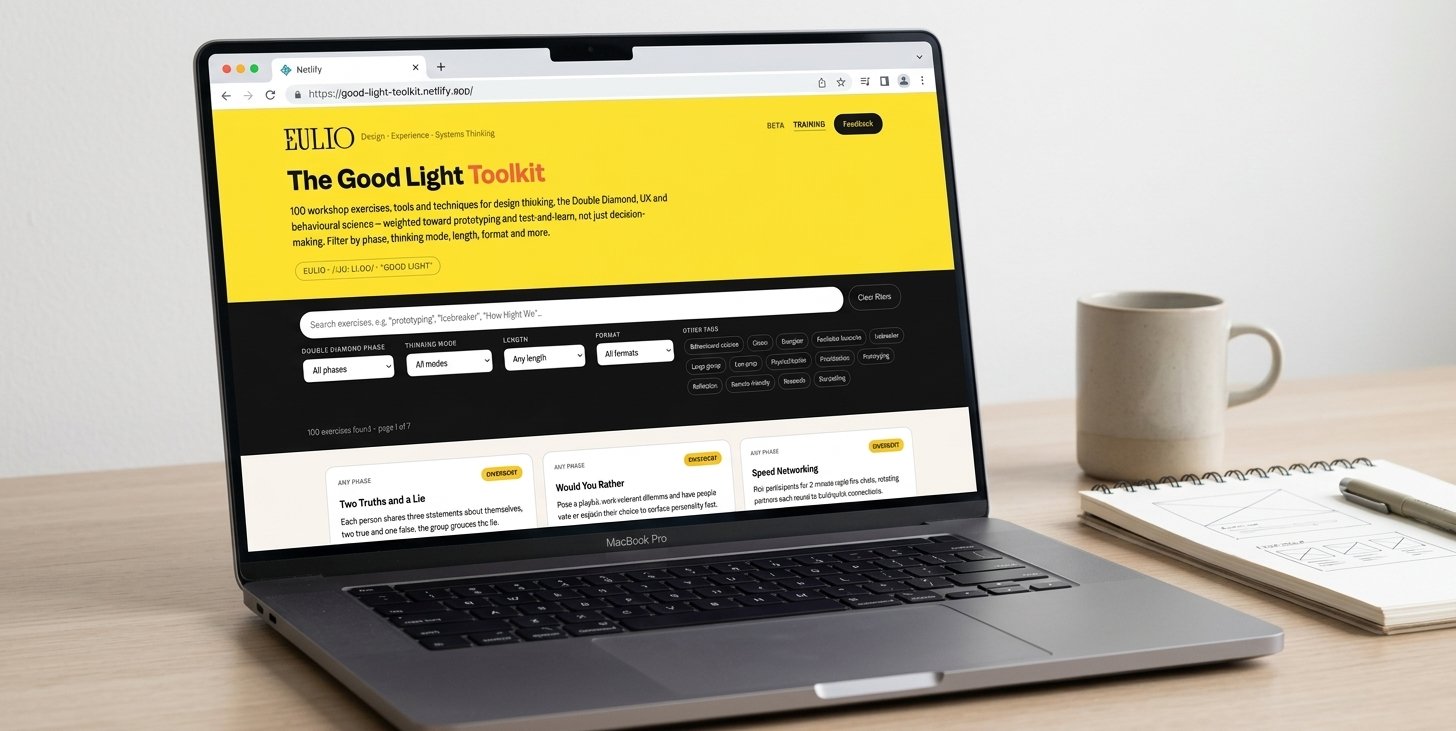
Every participant leaves with The Good Light Toolkit — 100 workshop exercises, tools and techniques, built from twenty years of running sessions that worked (and plenty that didn't).


The right expertise, when it's needed
Sometimes a session needs more than facilitation. Some rooms need a different kind of specialist entirely, and knowing when to bring one in is part of the craft.
We draw on a trusted network of specialists — voice coaches, accessibility experts, innovation coaches and others — brought in only when the room genuinely calls for it. You get deep, specific expertise tailored to the challenges your team is facing.
Multilingual facilitators
Storytelling specialists
Voice coaches
DEI and inclusion facilitators
Change management consultants
Accessibility experts
Visual scribes
Behavioural scientists
Let's talk
What's the one thing you want your team to walk away knowing how to do?

“Thank you, Ben Serbutt and team, for such a creative unleashing and inspiring two days. You said it – "trust the process" – and we did, and what an amazing journey it was.”
– HP participant

“The team found it really helpful, and hopefully much of what they worked on will have an immediate impact!”
– BHF organiser

“We loved having you, Ben! 💛”
– European Climate Foundation organiser